The Center for Disease Control explains the importance of the polio vaccination and the different forms of the vaccine. The CDC recommends that kids are given four different doses of the inactivated poliovirus vaccine (IPV) at 2 months, 4 months, anywhere from 6 to 18 months, and anywhere from 4 to 6 years old. This vaccine schedule is critically important if the child is going to a location where there is a greater chance of getting polio—outside of the United States. Adults who did not receive the IPV during childhood are still recommended to get it in 3 different doses: the first at any time, the second a few months later, and the last 6 months to a year after the second dose. The IPV alone has been used in the US to treat polio since the 2000, and, depending on the age of the patient, the vaccination is given in the arm or the leg. Another type of polio vaccine—oral poliovirus vaccine (OPV)—is not given in the US anymore as it can cause vaccine-derived poliovirus (VDPV). The CDC states that VDPV occurs when the weakened poliovirus that was in the OPV mutates, causing it to behave like the wild type, which is spread more readily through stool and respiratory secretions. The OPV is still used in places outside of the US where children are given it via drops in the mouth. However, the IPV is more effective as it has a 90% immunity for 3 types of polio after the first two doses and a 99% immunity after the third dose.
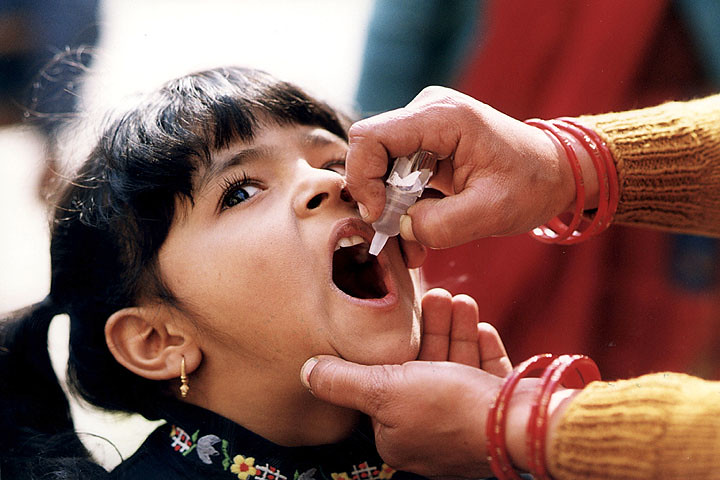
Stephanie Soucheray of the Center for Infectious Disease Research and Policy explained that the wild poliovirus type 3 (WPV3) has been completely eradicated. Because of this new eradication that occurred in October of 2019, two of the three types of the wild poliovirus are now eradicated all over the world. The WPV3 was last in Nigeria in 2012 and the last case of WPV2 was officially eradicated in 2015. The only place WPV3 exists is now in secure containment. Now, WPV1 is only found in Afghanistan and Pakistan, and it has not been found in Africa since 2016. However, some African countries have recently reported cases of VDPV from the OPV. Edna Mohamed writes that new polio cases in Africa have been linked to the OPV which causes more paralysis than the WPV1. The WHO found 9 cases caused by the vaccine last year caused by OPV in 4 different African countries. Because 95% of the population needs to be given the vaccine before polio is eradicated, the OPV is causing issues. However, OPV is used in developing countries because it is lower in cost and only needs two drops per dose.
I think polio eradication is crazy. It is amazing that two of the three types have been completely eradicated, and that the WPV1 is slowly diminishing. Though the OPV is causing issues with VDPV, I believe it is better to take the chance to keep the spread of WPV1 as low as possible. However, I do think it would be extremely beneficial to find a way to make the IPV cheaper so it can be used in developing countries. Additionally, I think the more awareness is spread the more money could be raised to possibly get the IPV to developing countries so the risk of VDPV could be nonexistent. Polio eradication is another important reason I advocate for vaccinations. Without the polio vaccines, it would be impossible for eradication to occur. Also, there would be little no herd immunity for immunocompromised people who could not receive the vaccine. I hope there continue to be more developments with the OPV so that the risk of VDPV ceases to exist.

 Micro Madness